Calibro stands out as a consultancy that understands the value of creative thinking, innovation and collaboration in achieving the best possible outcomes for their clients.
Stagecoach
Head of Strategic Development & the Built Environment

SERVICES
The flood events that damage quality of life most often are not the extreme ones. They are the ordinary ones: surface water backing up in a garden after heavy rain, groundwater rising into a ground floor through a wet winter, the minor watercourse that overwhelms its culvert and cuts off a street. These happen regularly. They fall below the threshold of formal flood risk policy, and they are systematically under-designed for.
They are also, in the right hands, an opportunity. Water in the landscape is not only a risk. Designed well, it becomes an amenity, an ecological network, a thread of blue and green running through a masterplan that makes a place worth living in. The design challenge is not only to defend against flooding. It is to understand what water can genuinely become here, and to build the evidence that makes that ambition real.
Every site has a unique fingerprint. The flow paths water already follows through the landscape, the low points where it gathers, the connections between what sits upstream and what happens downstream. Reading that fingerprint is how we begin.
The EA’s flood maps give us the first layer: flood zones, sources of risk from rivers, the sea, surface water, groundwater. But those maps are derived from regional-scale data that site-specific evidence can test and often improve. Sometimes the gap between what the national picture shows and what hydraulic modelling reveals is what makes a site viable. From that reading, we begin to understand the opportunity, not just the risk.
Water managed well is not a concession to nature. It is a community asset, a habitat, and on a well-designed scheme, a reason people choose to live there.
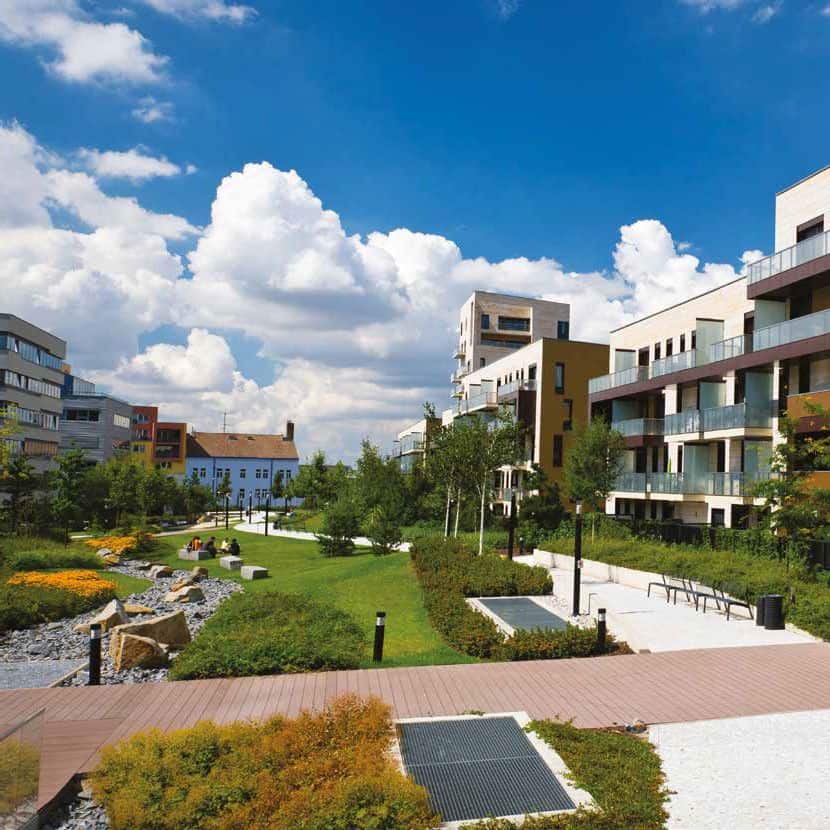
That understanding is tested through hydraulic modelling. Where national flood maps may overstate risk, site-specific modelling builds the evidence to challenge them, creating genuine development opportunity and reducing the constraints on masterplan design.
Modelling the downstream effects is as important as modelling the site itself. A drainage strategy designed to slow the flow, store water on-site, and release it at controlled rates can reduce peak flows downstream, improving flood conditions for the community that already lives there, not only for the development being planned. Sustainable drainage, designed with that intent, is one of the clearest expressions of what water-positive means in practice.
The NPPF’s strengthened requirements around flood risk and sustainable drainage point in the same direction. We were already here.
Whether it is a flood risk assessment for a planning application, a strategic flood risk assessment supporting Local Plan site allocation, hydraulic modelling to support a flood map challenge, or a drainage strategy integrating blue and green infrastructure into the masterplan, our approach flexes to create the narrative and evidence at any scale of flood risk work.
A water strategy, however well-conceived, only becomes a real place through the engineering that delivers it. That is why our flood risk work and our Infrastructure and Drainage team are closely connected: the drainage design, the site servicing, the physical structures that turn a water-positive vision into something that can be built and that will perform. When both are part of the same conversation from the start, what gets designed is also what gets delivered.
Every site has a fingerprint. Some are straightforward to read. Some carry genuine complexity, and the right thinking at the right stage is what determines whether that complexity becomes a constraint or the thing that makes the place memorable.
If you want water to earn its place in your scheme, as a driver of biodiversity gain, community space, and somewhere families genuinely choose to live, we are probably already aligned. Our door is open.
Calibro stands out as a consultancy that understands the value of creative thinking, innovation and collaboration in achieving the best possible outcomes for their clients.
We work across residential, commercial, health, education, infrastructure, renewables, retail and leisure, and wherever work takes us beyond that list. Every project builds on an established body of knowledge: how to use the planning system to a client’s advantage, what creates places that hold their value, and where early decisions protect against risk and leave a legacy that matters beyond completion.
Those learnings cross every sector boundary. What we take from a residential scheme shapes how we approach a commercial one. What we learn in one planning authority informs how we navigate the next. That accumulated intelligence is what you’re drawing on, whatever the brief.
The sector shifts. The thinking doesn’t.

We’re often involved early in projects, supporting site-finding activities, and moving on to the masterplan process. Schemes range from a few dwellings with simple access and layout considerations, through to large, mixed use schemes requiring modelling of the wider network and strategic infrastructure improvements.

We support development for wind, solar and energy-from-waste projects throughout the UK. This includes large scale wind farms to expansive solar schemes in areas of risk of flooding. As a corporate IEMA partner, we understand the specific legal requirements of environmental impact assessment.

Whether it’s transport planning or highway design, flood risk or drainage strategies, we understand the nuances of industrial and commercial development. We can take a lead role in optimising the masterplan process, support planning with robust evidence, and provide accurate, cost-effective construction designs.

We’re a trusted partner for a number of regional and national developers, bringing extensive knowledge of commercial development. We enable a scheme to be commercially optimised, understanding the importance of maximising passing trade; while also minimising the severity of associated traffic effects.

Our team of experts has extensive experience of advising on all types of health and wellbeing facilities. We provide transport planning, highway, flood risk and drainage input across a range of developments, including primary and secondary schools, GP surgeries, pharmacies and dental practices.

Every leisure development is different – whether it’s a new campsite, gym or stadium. The journey through the planning system is just the start. We ensure that fundamental engineering principles are ingrained in our solutions, to expedite the design and approval stages, and get contractors on site sooner.


