
The New NPPF puts community and connectivity at the heart of the vision. At Calibro, we always have.
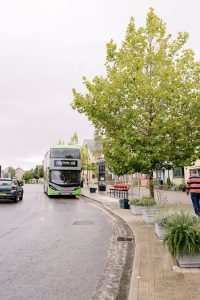 The latest National Planning Policy Framework puts movement, connectivity and accessibility at the heart of how we plan new developments – and ultimately, it’s about people. The message is clear: we all need to go further, not just creating places but building communities – designing spaces where neighbours want to meet and talk, where children want to play, where people can easily walk and wheel to the things they need and where getting around without a car feels like a natural choice.
Transport policy is no longer contained to a single chapter, it now runs through the Framework from the very start – reinforcing the approach that has been embedded in the way Calibro works for years; shaping successful communities through vision-led transport planning from day one.
The biggest change isn’t in one paragraph
This isn’t just another NPPF update. It’s a fundamental shift. It’s easy to read the New NPPF by looking for what’s new, what’s gone and what individual paragraph and policy changes might mean for the transport evidence and strategy. Much of the commentary since it landed has done exactly that. But it misses the bigger picture.
Since 2012, successive versions of the NPPF have largely tinkered around the edges. Words have been added, paragraphs amended and reordered, but the basic structure, and how transport sits within it, remained the same. The new NPPF is different.
For the first time, transport and movement are no longer confined to a standalone chapter and the handful of all-too-familiar paragraphs 109-118. Instead, connectivity, accessibility and vision-led transport solutions run throughout the framework and underpin the wider policies shaping how new communities are planned, designed and assessed.
The expectation is explicit – the transport strategy no longer gets prepared in isolation and overlaid as mitigation when the development design is at an advanced stage. It must be embedded into the vision from the outset and evolve with the evidence. It’s this process that distinguishes a credible vision-led transport strategy from an aspiration alone – grounded in evidence, tested through design and refined iteratively alongside the masterplan, with each part informing and strengthening the other.
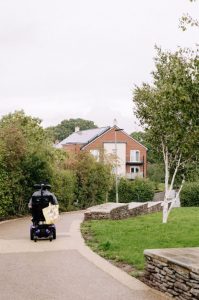 Designing it right
One of the most welcome aspects of the updated framework is its increased focus on safe, inclusive and accessible public spaces. The NPPF now places greater emphasis on creating environments that support natural, everyday social interactions and feel safe for everyone, including women, girls and more vulnerable people. These spaces are not an afterthought. They are often the places where communities start to grow, are strengthened and thrive.
Whether it’s a town square, a shared path, the village green, or a local hub where neighbours bump into each other, the way people experience movement through a place and are encouraged to stop and interact has a direct impact on how connected, sustainable and successful the community that grows around it becomes.
Moving beyond placemaking to community building
At Calibro, this matters because it aligns closely with the way we already work. Traditionally, the transport assessment has been treated as something that follows the development concept. A masterplan is prepared and a transport strategy is then layered over the top, often with the primary aim of reducing car-based demand and the need for highway-based mitigation.
The new NPPF supports a different approach. Movement, connectivity and accessibility outcomes should be considered from the start, embedded into the development vision from day one and influencing the masterplan itself; where uses are located, how people move through a place, how communities connect with their surroundings and each other, and the choices people have about how they travel. For us, that means looking beyond placemaking and focusing instead on community building. Transport isn’t simply about moving people around. It’s about creating the conditions for communities to thrive.
Narrative led but evidence driven
 A common misconception is that the visioning approach replaces a rigorous evidence-led transport strategy. It doesn’t. The test remains the same. Development proposals must still be supported by a robust and proportionate transport assessment demonstrating that any significant adverse impacts can be appropriately mitigated such that unacceptable highway safety issues or severe residual impacts do not arise.
The difference is that the vision comes first. A clear vision helps establish the outcomes a new development is seeking to achieve, informs the transport and movement strategy required to support those outcomes, and identifies the measures necessary to accelerate successful delivery. The technical evidence must demonstrate that the transport vision is more than just an aspiration – it’s a realistic future scenario, critical for building a sustainable community with wider-reaching benefits.
We provide detailed input for the development of a commercially viable masterplan, grounded in a clear narrative to express the logic of the proposals and underpinned by rigorous evidence set out in transport assessments, transport statements, or environmental statements. This narrative led but evidence driven approach serves as a solid foundation to support the case for new development proposals against the new NPPF decision-making policies.
Why our clients should care
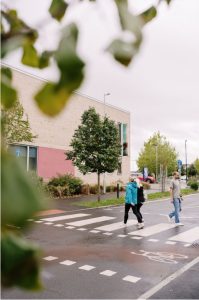 Our vision-led approach to transport planning creates advantages throughout the planning process; accelerating the application and helping decision-makers get to that all-important yes:- .
- Strengthens the planning case by demonstrating that accessibility and movement have informed a sustainable development strategy.
- Creates a stronger narrative around a successful future community with wider-reaching benefits, rather than focusing solely on transport impacts.
- Identifies transport and accessibility solutions that support the new development and unlock wider benefits -giving back to the existing community it sits within.
- Provides an evidence-led and more credible assessment of future travel behaviour reflecting genuine future opportunities that aren’t constrained to the private car or inherently justifies highway-based mitigation;
- Distinguishes clearly between more-immediate mitigation requirements and realistic longer-term sustainable travel ambitions.
- Drives proactive and positive collaboration across all partners and stakeholders, getting critical buy-in from the start and giving decision-makers a clear, policy-led route to supporting the proposal.
This is the Calibro approach
 The updated NPPF confirms a direction of travel that we have believed in for a long time – so strongly that it’s embedded in our Mission and Our Promises. We work collaboratively and effectively from the first day of the project to create a strong narrative, undertake robust technical analysis and identify the vision-led solutions to the big challenges that effectively drive the application forward. We don’t bolt an aspirational transport strategy onto a completed development proposal. We develop an evidence-led and credible narrative to help shape the vision from the outset, planning for well-connected and accessible places that will ultimately become successful and sustainable communities. As a result the transport strategy is not a standalone document disconnected from the development design. It’s embedded within the master-planning strategy itself. And that’s exactly what national planning policy is asking for.